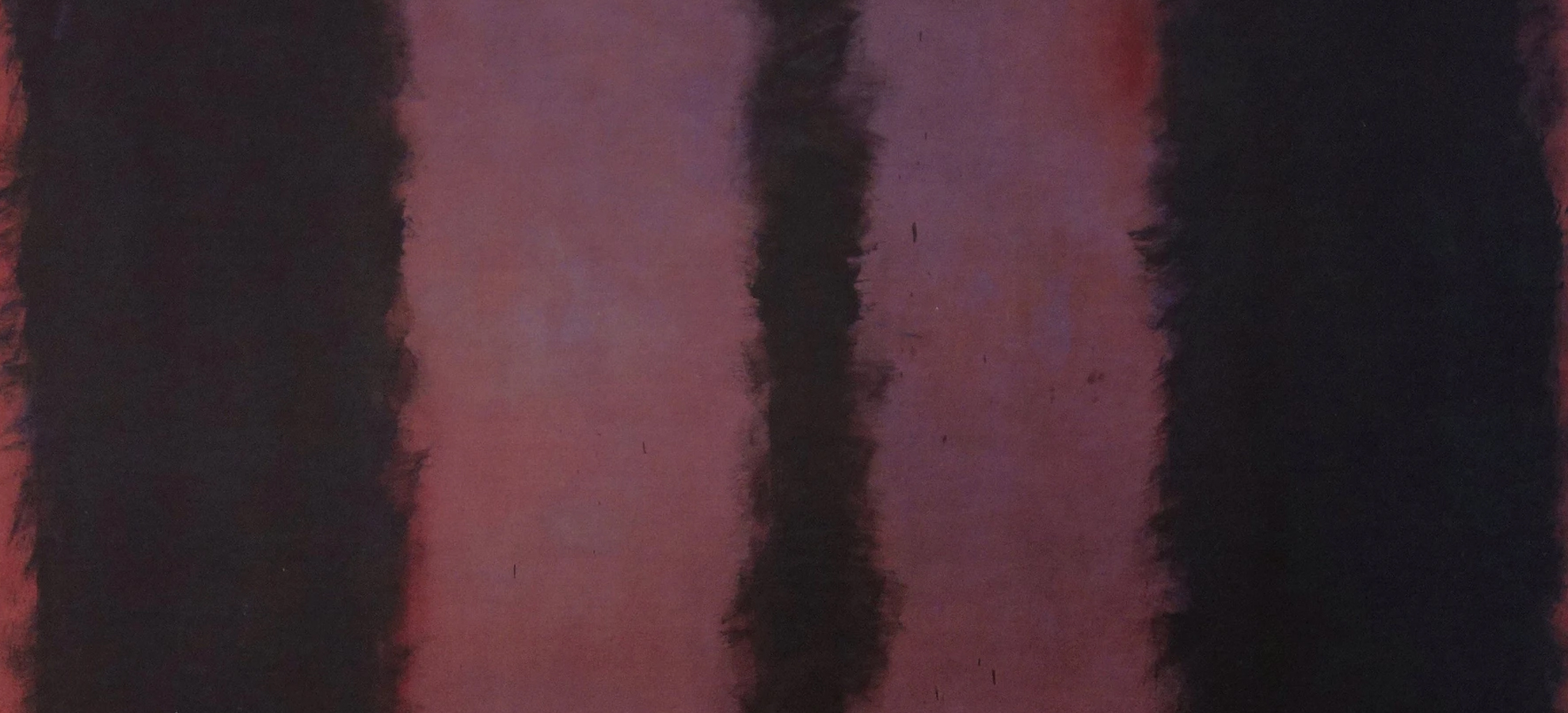
Detail of Black on Maroon by Rothko
Red
A whirl of frenzied activity dominates the stage as the two actors cover the giant canvas in red paint. Paint splatters everywhere and I’m certain the first row of seats gets a spray of paint. The two actors are drenched in paint, anointed with it like some barbaric pagan gods. I cannot look away and it feels like the rest of the theatre, no the world dissapears and all I can do is stare, transfixed by the spectacle before me.
Red remains the most spectacular piece of theatre I’ve ever witnessed. Set in 1958/59 it imagines an encounter between Mark Rothko and a ficional assistant as he paints his infamous Seagram Murals – a series of paintings that were commissioned for the Four Seasons restaurant in the Seagram building in New York however on visiting the restaurant Rothko decided the room was not right for the paintings and cancelled the commision. The paintings currently sit in the Tate Britain but I first saw them in the Tate Modern in a specially made room coloured grey and dimly lit according to Rothko’s wishes.
I have always held a deep fascination with the Seagram murals. There is something about the grey room and the dim light and the size of the paintings that stops me dead in my tracks. As an atheist it’s the closest thing I’ve ever had to a religious experience, something about them calms me and haunts me at the same time. I sit in front of each painting and find myself engulfed by them, it feels like the paintings grow in size before me and fill my vision blocking out anything else, the ghostly doorways in them swell up and draw me in. Time seems to slow to a complete stop and I’m rooted to the spot. Every time I see them my thoughts wander to ideas of mortality and death and what lies beyond – not in a morbid way but with clarity and calmness, with a sense of acceptance and inevitability.
About Bob
Bob is a Printmaker who specialises in Limited Edition linocut block prints. This blog will give you a bit more background on Bob's work, how he creates his prints, what inspires him and advice for other artists.